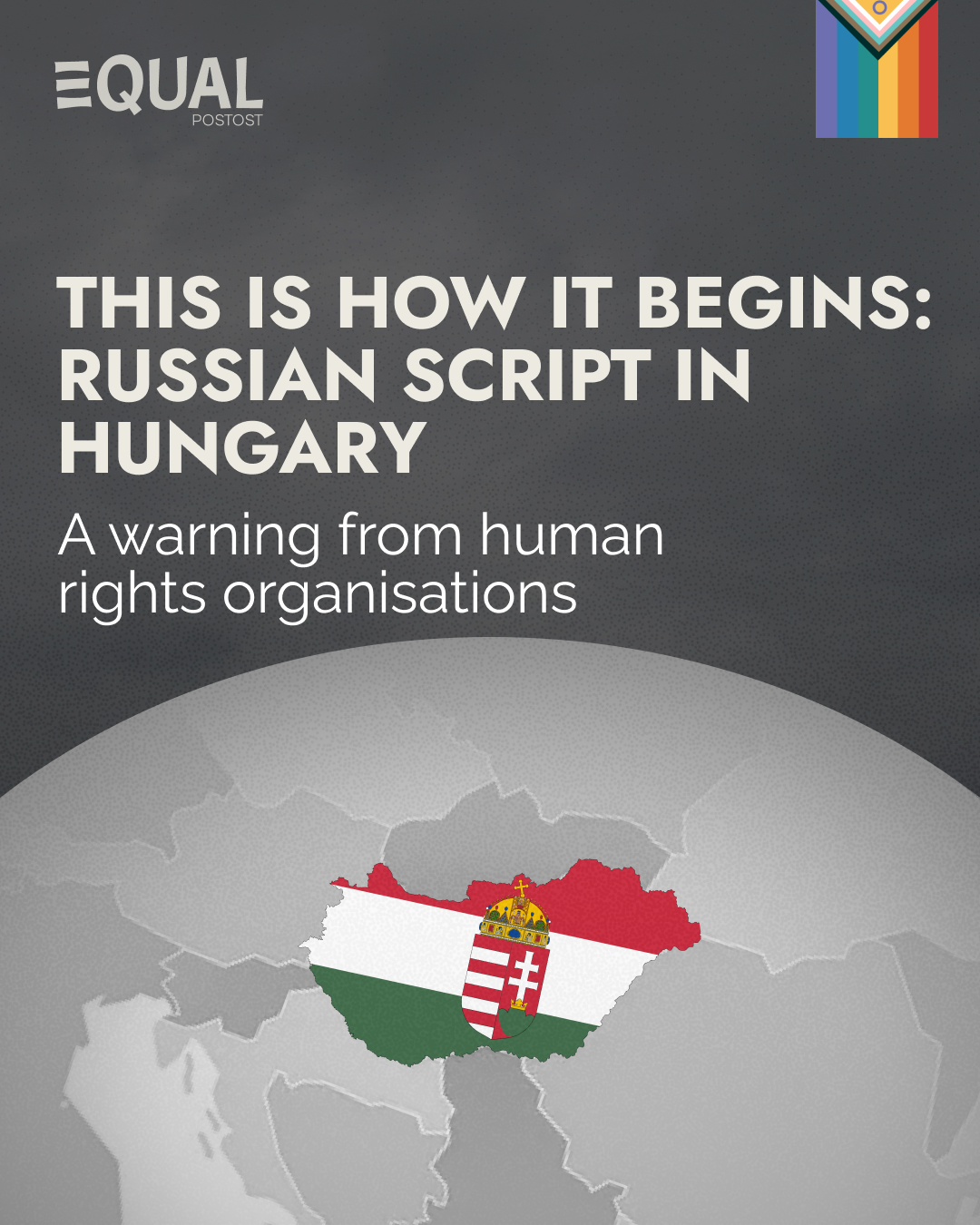
7 April 2026
To: Voters in Hungary, policymakers in the European Union, media and civil society representatives
On the eve of the parliamentary elections in Hungary, we issue this statement on behalf of organisations working to protect fundamental rights and freedoms in Russia and Eastern and Central European countries. Having many years of experience of observing the dismantling of democracy, rule of law and human rights guarantees in Russia, leading to the emergence of an extremely repressive and aggressive regime, threatening security and well-being of the whole of Europe, we are very worried about the recent developments in Hungary which closely resemble the evolution of the situation in Russia. The outcome of the upcoming elections will affect not only the people of Hungary; it will also determine how resilient the foundations of European security and human rights protection will remain across the continent.
Over the past twenty years, we have witnessed how this threat gradually took shape in Russia: it was the ban on the so‑called “LGBT propaganda” among minors that marked the beginning of a systematic dismantling of human rights and the militarisation of the state. Today we see Hungary adopting the same repressive narrative. We already know how hate speech and discrimination turn into real violence – and what this scenario leads to if it is not stopped in time.
The European path, supported by many Hungarians, is a courageous choice in favour of a future built on human rights, freedom, and unconditional respect for every person. This is the very vision of an open, safe and prosperous society that many people in Russia once genuinely hoped for when they aspired to become part of a space of democracy and European values. Our shared hope was to move forward towards a future in which human dignity, independent courts, freedom of the media, free and fair elections, and solidarity are at the centre of public life.
In Russia, the prospect of a freer and safer future has already been severely undermined. In Hungary, society still has this opportunity. Today, however, we see this prospect being put into question through political decisions that deliberately restrict rights and freedoms and systematically employ enemy images, closely following the already familiar Russian script. Rolling back the rights of vulnerable groups does not protect “traditions”; it means abandoning European values and standards of human rights and equality, and ultimately weakens guarantees for everyone’s rights.
LGBTIQ people as the first target of populism
What is presented as the “protection of children and traditional values” is, in practice, a political technology for holding on to power. In Hungary, we see the same narratives being deployed that were previously used to dismantle civil society and fundamental rights in Russia, including:
– the adoption of laws on the so‑called “protection against LGBTIQ content”, censoring culture and education.
– constitutional definition of marriage exclusively as a union between a man and a woman, in order to marginalise same‑sex couples.
– de facto bans on adoption by transgender people and same‑sex couples.
– attempts to stigmatise, restrict, or entirely ban public events in support of LGBTIQ people, including Pride marches.
This is not about protecting families. It is about manufacturing an internal enemy to consolidate power in the face of very real political and economic challenges.
The experience of Russia shows: once a state starts by depriving its own citizens of their rights, it never stops there.
Populism always offers simple answers to complex problems. When hate‑fuelled rhetoric against LGBTIQ people no longer delivers the desired political results, the regime looks for an external enemy. In Russia, it started with a ban on “propaganda” and escalated into imperial revanchism and an aggressive war that is devastating for the whole of Europe.
A threat to the entire European Union
Developments in Hungary are a cause of profound concern. They pose a challenge to the European Union as a whole. Authoritarianism is like a virus: if systemic human rights violations within a single EU member state are ignored, this precedent influences other member states and corrodes European institutions from within.
If nothing is done now…
We see how LGBTIQ people from Russia live in a reality where their rights have been erased, their voices criminalised, and their country plunged into dictatorship and war. We are all paying a high price for failing to recognise this threat in time.
We see the same storm clouds gathering over Hungary, and we urge you not to allow the situation to become irreversible.
We call on:
Voters in Hungary: To critically assess populist slogans. When you cast your vote, remember that trading away human rights for the illusion of stability always ends in disaster.
The media: To stop amplifying hate speech as just “an alternative view” and to call things by their proper names: homophobia and transphobia are tools used to dismantle democracy.
EU policymakers: To take a firm and principled stance. European values and human rights must never become bargaining chips or be sacrificed for short‑term political convenience.
Hungary’s tomorrow must not become that of today’s Russia. The choice is still yours to make.
Evi Chayka, Executive Director, EQUAL PostOst
Dmitrii Zair-Bek, Human rights defender
Elena Shakhova, Human rights defender
Inna Berezkina, School of Civic Education
Yuri Dzhibladze, Deputy Chair of the Board, Freedom Files
Katya Dikovskaia, Head of StopArmy Movement
Anastasia Shevchenko, Director of charity foundation “Through the wall”
Lana Pylaeva, Director of Komi Daily
Natalia Arno, Free Russia Foundation, President
Alexey Sidorenko, Co-founder and Director of Teplitsa
Olga Romanova, Russland hinter Gittern e.V. Direktorin
Sergey Lukashevskiy, member of the Russian Helsinki group
Sergei Davidis, human rights defender
Elena Stein, Center for Independent Social Research e.V. Berlin